

Car Finance
"I really liked that it gave me all my options for car finance. It was a great, easy experience!"Roxanne, October 2019

Hire Purchase (HP)
Hire purchase or HP is an arrangement where you hire the car from a finance company until you’ve fully paid for it. The company own the vehicle until the final payment is made, after which time it’s yours to keep. Hire purchase tends to require a deposit usually 10% of the car’s value. The higher the deposit, the lower the monthly payments.
Personal Contract Purchase (PCP)
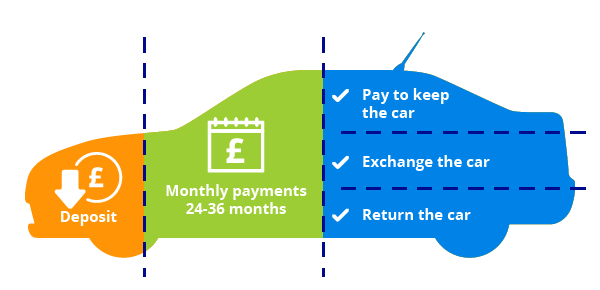
Personal contract purchase or PCP is similar to hire purchase. You’re likely to be asked to pay an initial deposit, and then monthly payments for a set period. The higher your deposit, generally, the lower the monthly payments. Even with the deposit though, monthly payments are typically lower than you’d find with a hire purchase deal or a personal loan. This is because you'll be paying off the value of the depreciation of the car, not the full value of the car.
At the end of the agreement, if you decide you want to keep the car, you’ll need to pay what’s known as a ‘balloon payment’. This covers the cost of the vehicle and transfers ownership from the finance company to you. If you don’t want to keep the vehicle, you can give it back, or start a new PCP deal and get a new car.
Personal Loan
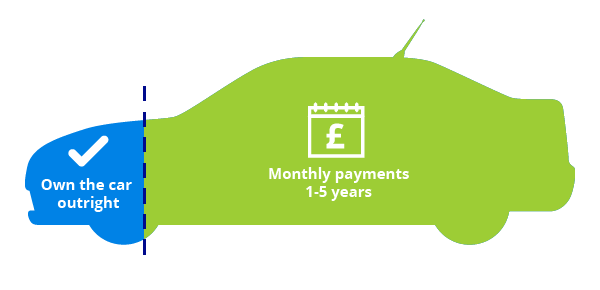
A personal loan sometimes called an unsecured loan, allows you to borrow a lump sum over a fixed term. This isn’t secured against anything. That means if you use a personal loan to pay for your car, you’ll own it outright from the day the money is transferred to the dealer. As such, you can sell the vehicle at any time, without needing to settle up with the finance company first. If you think this would be a better option for you then you may want to visit our page for a quote.
How can I save?
Before taking out a car loan, you need to take into account how much you're spending, how much you can afford to pay back each month and how good your credit history is. The great way to compare deals is to look at the total cost of credit as this will take into account the monthly payments, and how long you'll end up paying back the loan for. One thing to be careful of when comparing finance deals is that, while extending the period may bring down the cost of monthly payments, it could also mean you'll pay more interest overall.
Can I get car finance if I have bad credit?
Understanding your options
Everyone has a different financial situation, so there's no 'one size fits all' with financing your next car.
Before you start looking for a car loan, you'll need to think about a few questions, such as:


Once you've answered these questions, you'll be in a much better position to choose the best way to fund your next car.
Need more help? Take a look at our car finance jargon buster.


0 comments:
Post a Comment